Why Balearic Companies Leave, and What Would Make Them Stay
The islands are better at starting companies than keeping them. The leak happens at one specific moment, and it is the moment local capital could fix.
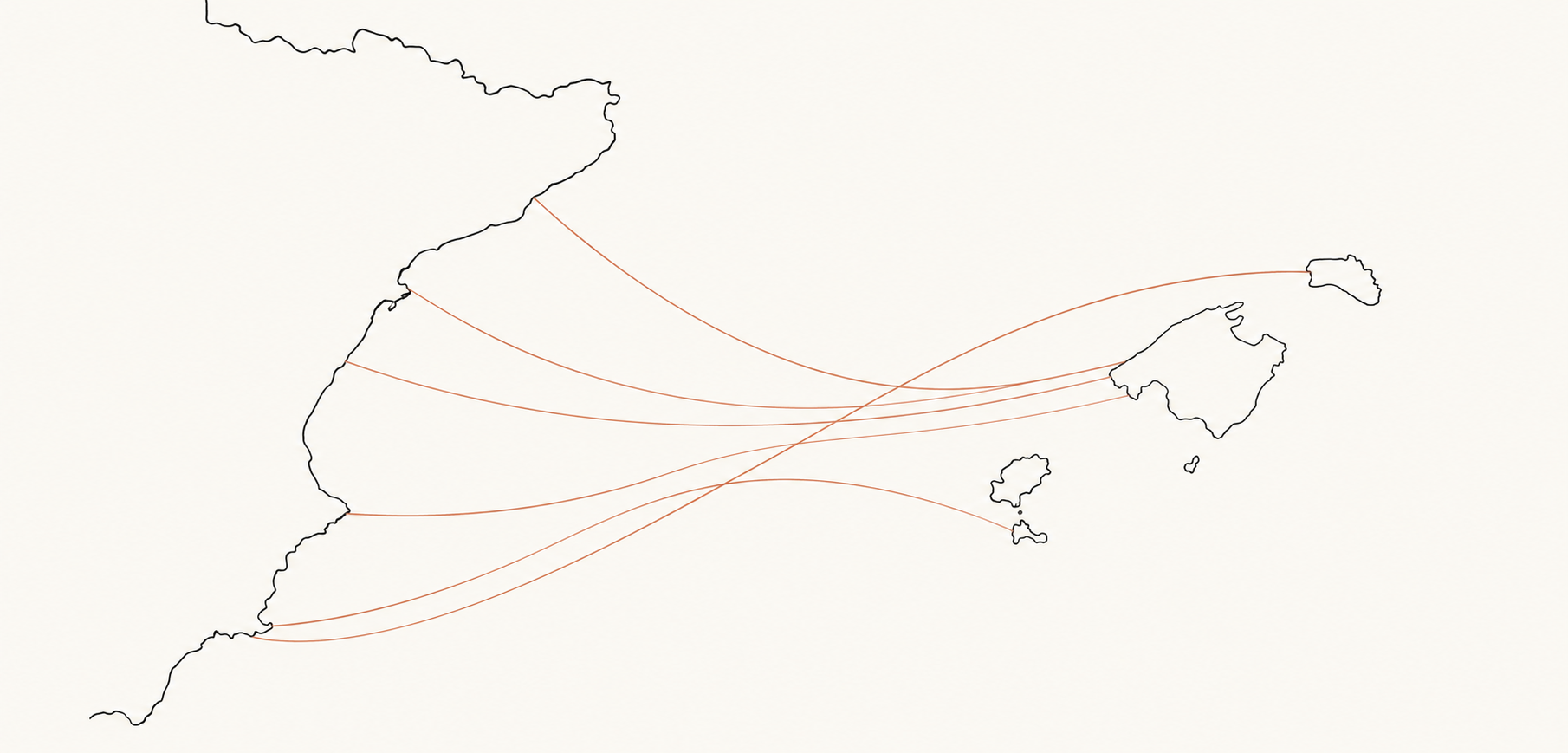
There is a pattern on Mallorca that anyone close to the local business scene has watched more than once. A company starts here, builds something that works, hires a few people, and then reaches the point where growing further needs more capital than the islands can put together. At that point the conversation shifts to Barcelona or Madrid, sometimes London, and within a year the headquarters has moved, the senior hires are being made somewhere else, and the company that was Balearic is now a Balearic origin story.
Nobody in that sequence behaves badly. The founder is doing what the situation requires. But the islands end up carrying the cost of forming companies while another ecosystem collects the return, and that is a fixable problem rather than a fact of island life.
The Islands Start More Than People Realize
It helps to be precise about what already exists, because the assumption that the Balearics have no technology base is out of date. ParcBIT, the innovation park outside Palma, has been running since 2002 and now hosts roughly 170 companies employing over three thousand people, with combined annual revenue above one billion euros. Information technology services are the largest category of tenant, ahead of tourism-related businesses, and the park sits beside the University of the Balearic Islands, close enough that a metro connection now links the two in about two minutes.¹ It houses research institutes alongside the research and development operations of companies including Trivago and Microsoft's tourism-focused unit.²
The public commitment behind that has continued rather than stalled. The regional government has put 1.9 million euros into expanding available space at ParcBIT, with more than eleven thousand square meters of buildable area to develop, opened a new Centre Bit on Ibiza, and committed 5.8 million euros over three years to the Menorca site, whose stated purpose includes the retention of qualified talent on the island.³ That last phrase is the whole issue, named by the people running the programs.
The companies exist too, and some are doing serious work. At South Summit in 2026, seven Balearic technology companies presented under a stand organized by Fundació Bit and the regional development agency, with the islands positioning themselves specifically around applied artificial intelligence in tourism technology, a field where local firms have a genuine claim to international standing rather than an aspirational one. Companies like AtalaIA, working on applied AI for business decision-making from ParcBIT, and Ubex, building AI infrastructure for regulated environments, are not hypothetical.
The Leak Is at One Specific Stage
So the problem is not formation. Companies get started here, and the infrastructure to support that is better than the islands' reputation suggests. The problem arrives later, at the round where a company needs several million euros rather than several hundred thousand, and the local supply of capital thins out to almost nothing.
The geography of Spanish venture capital explains why that pull is so strong. Madrid alone accounts for roughly 48 percent of all venture capital investment in Spain.⁴ In 2024 it attracted 85.3 percent of all foreign technology investment in the country, and in the first half of 2025 it drew more venture capital than Barcelona for the first time in years, 806 million euros against 690 million.⁵ Two cities hold most of the capital, most of the funds with offices on the ground, and most of the corporate buyers who make pilot programs and acquisitions possible. A founder who needs a large round has rational reasons to be where those people are.
This is a scaled-down version of a problem Spain has at the national level. The ecosystem has improved dramatically at seed and pre-seed, but the persistent gap is the consolidation of domestic funds able to lead large growth rounds, and the consequence of that gap is the departure of the most promising startups to markets like the United States or the United Kingdom in search of the capital they cannot raise at home.⁶ What Spain experiences in relation to London and New York, the Balearics experience in relation to Madrid and Barcelona. The mechanism is identical and only the scale differs.
What Leaves With Them
It is tempting to treat relocation as a symbolic loss, a matter of civic pride about where a logo says it is based. The concrete losses are more specific than that.
The senior jobs go first. A company that moves its headquarters keeps some operational staff on the islands for a while, but the roles that get created after the move, the engineering leads, the commercial leadership, the finance function, are hired where the head office is. Those are precisely the well-paid, year-round positions the Balearic labor market is short of, and the ones that give a local graduate a reason to build a career here rather than leave.
The tax base follows the entity. So does the eventual exit value, which matters more than it sounds. When a company sells, the founders and early employees who hold equity receive capital, and in functioning ecosystems a meaningful share of that capital gets recycled into the next generation of local companies. Founders who exit become angel investors, advisors, and second-time founders in the place where they made their money. An ecosystem that exports its companies before exit never gets that flywheel started, because the people who would have funded the next round of local startups are now living and investing somewhere else.
And the example goes. A visible local company that scaled without leaving does more to convince the next founder that it is possible than any amount of institutional encouragement. The absence of those examples is self-reinforcing, since each departure makes leaving look more like the normal path.
Why the Founder Is Not the Problem
It is worth being clear that a founder who relocates to raise a round they could not raise here is making a defensible decision, not abandoning anyone. Their obligation is to the company, its employees, and its existing investors, and if the capital is in Madrid then that is where they need to be. Framing departure as disloyalty is both unfair and useless, since it addresses a motivation that is not the cause.
The cause is supply. Companies leave because the money is elsewhere, and they will keep leaving until enough of it is here. That reframing matters because it points at something the islands can change, rather than at something they can only complain about.
The Remote Work Objection
There is a reasonable objection to all of this, which is that distributed work has weakened the case for relocating at all. A company can now hire in Berlin and sell in London without moving its registered office, and plenty of investors have grown comfortable backing companies they will mostly meet by video. If that is true, the geography of capital should matter less than it used to.
It matters less, but not as little as the argument implies, and the reason is specific. What pulls a company to Madrid at the growth stage is less about where the engineers sit than about proximity to the people who lead rounds, sit on boards, and make introductions to the next investor and the first large customer. Those relationships still form disproportionately through repeated in-person contact, and a board that meets somewhere else exerts steady pressure on where the company's center of gravity ends up. Remote work has made it easier for a Balearic company to employ people anywhere. It has done less to make it easy to raise a Series A from the islands, which is the constraint this piece is about.
What Would Change the Outcome
Three things, roughly in order of how quickly they could move.
First, more local capital available at the stage where the leak happens. The islands have a reasonable supply of people able to write early-stage checks, which Article Six of this series argued is under-deployed given how much Balearic wealth sits in property. Angel capital alone does not close a several-million-euro round, but a well-organized local angel base changes the first two rounds, and it builds the relationships and the track record that a later local fund can be built on.
Second, follow-on capacity, meaning the ability of local investors to participate in the next round rather than being diluted out of it. An ecosystem where local money funds the beginning and outside money funds everything after produces the relocation pattern described above, because the investors with influence over the company's direction are all somewhere else. Reserving capital for second checks is unglamorous and it is the part that keeps a company anchored.
Third, syndication reach, meaning local investors with enough connection to mainland and European funds that a Balearic company can raise a larger round with a local lead and outside participation, rather than needing to move to be seen at all. That is a relationship problem more than a capital problem, and it is the kind of thing an organized network can solve faster than an individual founder can.
None of this requires the islands to compete with Madrid on volume, which is not a winnable contest. It requires enough local capital and enough local connection that leaving stops being the only option at the moment a company starts working.
That is the specific gap Max Ventures and Balearic Business Angels are built around: local capital, organized well enough to back companies through more than their first round, and connected enough to bring outside investors to a Balearic company rather than sending the company out to find them. Formation is the part the islands have already solved, and the retention problem sits downstream of it, at the one round where local supply currently runs out.
Sources
1. Ultima Hora, El Parc Bit: un ecosistema que factura mas de mil millones (Fundacio Bit figures). https://www.ultimahora.es/noticias/economico/2019/05/31/1084329/parc-bit-ecosistema-factura-mas-mil-millones.html
2. IASP, ParcBIT: Balearic Innovation Technology Park. https://www.iasp.ws/our-members/directory/@5916/parcbit---balearic-innovation-technology-park
3. Ara Balears, ParcBit: the innovative vanguard of the Balearic Islands. https://en.arabalears.cat/society/parcbit-the-innovative-vanguard-of-the-balearic-islands_1_5586619.html
4. Growth List, 1,000+ Funded Spain Startups 2026: Latest Data and Contacts. https://growthlist.co/spain-startups/
5. Novobrief, How Barcelona became Southern Europe's startup hub, and why Madrid is closing in. https://novobrief.com/how-barcelona-became-southern-europes-startup-hub-and-why-madrid-is-closing-in/11787/
6. Fundacion Marques de Oliva, Innovacion y sostenibilidad: el futuro de las startups espanolas para 2026. https://fundacionmarquesdeoliva.com/futuro-de-las-startups-espanolas/
7. Economia de Mallorca, El ecosistema emprendedor balear gana visibilidad en el principal encuentro de startups de Espana. https://www.economiademallorca.com/articulo/innovacion/ecosistema-emprendedor-balear-gana-visibilidad-principal-encuentro-startups-espana/20260604125217120039.html