Mallorca and the Assumption of Leaving
On the Balearic Islands, ambition often comes with an unspoken condition: you have to leave. A personal look at why that is, and what might change it.
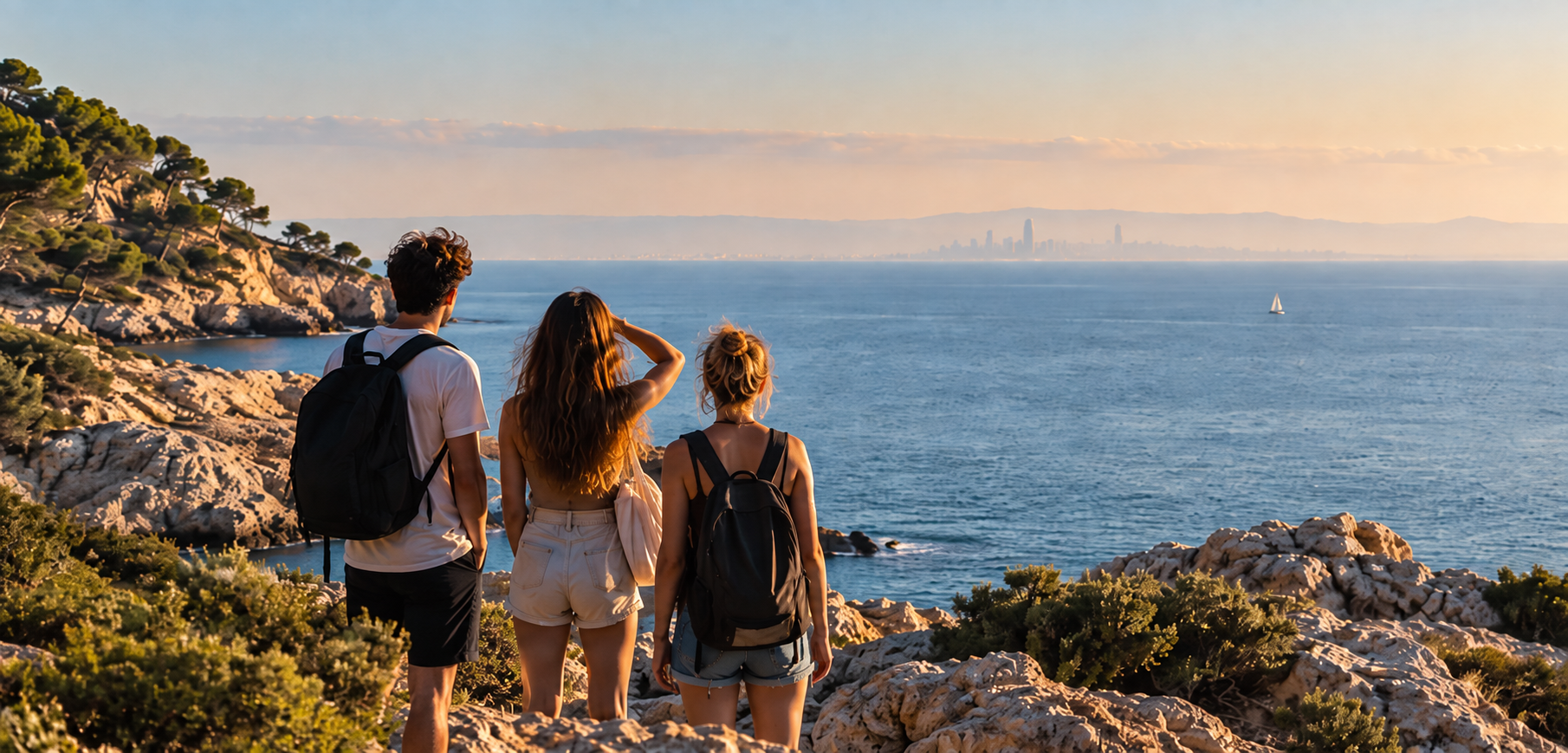
While visiting some friends in Portugal last August, one of them had just returned from his vacation in Mallorca and his first question to me was "What do you do besides going to the beach?"
It was a question that only someone who saw this island as a vacation could ask; a place only synonymous with pleasure, relaxation and endless summer.
Yet for those who were born and raised here, it is more than just a seasonal pleasure - it is a home. Like anything familiar, our home builds our identity. It is the place where we find our first friends, go to school, have our hard times and maybe even imagine our future. As children, we don't choose where our home is, but instead, we are guided by our parent's decisions and end up somewhere that we didn't choose, yet we feel safe in. Over time, however, we grow more autonomous, becoming more conscious of our own aspirations and grasping onto any given opportunity for growth.
A Home That Assumes You Will Leave
The primary milestone in a student's autonomy is reaching the point of making decisions regarding higher education and career paths, but for students on the Balearic Islands this comes with the assumption of leaving. On an island whose economy largely revolves around tourism, job variety becomes scarce. The place that offers an idyllic childhood, does not always offer the future you hoped for.
Jet Ski rentals crowd the coastline, restaurants stir with seasonal staff and from time to time you slow down on the road because of a white carriage. The career options within the tourism industry are very versatile - but not necessarily those that the young generation is looking for.
So how come the place we always called home cannot offer us the career we desire?
In an age where social media actively shapes our perception, accepting cliches as reality has become the norm. Because the Balearic Islands have established themselves as a tourism-dependent land, that image eventually comes to define how it is perceived externally, and eventually internally.
While the UIB (Universitat de les Illes Balears) continues to invest in the education of its local students, the same students may choose to pursue their studies in larger cities, drawn by the prospect that they will have greater academic resources, wider networks and broader career choices. Highly qualified graduates in public policy or engineering often have to face a difficult choice: remain on an island that can primarily provide it with low-skilled jobs within the tourism sector, or move elsewhere to pursue a career that will enable them to apply all the skills they have specialized in. Just like these graduates, a Mallorquin classmate of mine whose family has been here for many generations, is planning on moving to Madrid or Germany to study industrial engineering. "It wasn't a difficult decision," she says, "as it is very normalised in my family, seeing that both of my siblings left to study abroad."
The Numbers Behind the Pattern
This pattern is reflected in migrational evidence. According to the Balearic Islands Youth Yearbook 2025, more than 13,300 young people between the ages of 15 and 34 reside outside the Balearic Islands, which is already a 8% increase since the previous year. And while rising house prices are a significant driver, educational and professional opportunities play a vital role in encouraging young people to leave.
My Own Decision to Leave
Considering today's political climate and growing global instability, it is clear that young people like me will grasp onto any greater opportunity they can find. My opportunity, for example, lies somewhere between the Netherlands and Madrid, where I'll be studying diplomacy and international relations. Leaving was an intentional choice, because it was clear the local prospects could not match the scope of my future. But departing does not necessarily mean never returning. As another local classmate noted, "Maybe I will return, but not until later in life, as I would like to first explore other cultures and surroundings."
What Might Bring People Back
Some of those who leave because of limited job prospects may already have ideas about how they could contribute to the local economy. A Dutch classmate who has been living here for 16 years explained that, "I would try to develop the financial industry because there is a lot of money on the island." This is especially significant given the island's dependence on tourism.
If young people were given greater opportunities during their studies and hopes that one day they could make a meaningful contribution to the local economy, they may still choose to leave to gain greater academic experience, but they could be more likely to return later in life. In the long-term, creating such opportunities might encourage people not only to return, but potentially start building their career already on the island. Eventually, the islands' external perception may shift completely.
A Community Worth Returning To
It is also important to note cultural influence. Speaking from a personal voice, it is evident that in many ways the Spanish people, specifically on the Balearic islands, are inclined towards a more collectivistic lifestyle. While elders spend their mornings at local cafes sharing a warm coffee with a llonguet, and drinking a caña at dinner, my peers assemble together at the beach or a nightclub. The presence of the Mallorquin dialect, with its distinct rules, is clear evidence of the tight bond this community forged over the centuries - a bond so close that their language remained deeply preserved and distinct. Vitality lives in a community. So for those who were born and raised here, this may be another reason to return - another chance to make the change you never did.
Not the Beaches I Remember
I wasn't born here, but when I think of Mallorca, beaches are not the first thing that comes to mind. When I think of Mallorca I remember it as the environment that taught me Spanish, Catalan and English; the place that made me feel safe enough to go to a local bakery alone and the island with the kindest employees. Tourism has given this island its face, and it should continue doing so.
Unfortunately, I never found my reason to stay, but the warmth and kindness of this place will forever be my reason to return. When the tempo of my days eases, and I hole up somewhere in an antique villa in Valldemossa, the islands become a place of both beauty and opportunity, giving young generations a reason to stay.